Electrical Safety • Whittier, CA
Signs of a Bad Electrical Outlet (and When to Call an Electrician)
An electrical outlet usually gets little attention until something about it starts to feel wrong. A plug that slips out, a warm faceplate, flickering power, buzzing, discoloration, or an outlet that stops working can all be signs that the receptacle needs attention. Normal wear can loosen the contacts inside an outlet, while loose wiring, overloaded circuits, or heat can create more serious problems behind the wall. The good news is that most warning signs are easy to spot when you know what to look for. Here’s how to recognize a bad outlet, what may be causing the problem, and when to call a licensed electrician for help.
Call Clear View Electrical: (562) 445-3551
What Is a Bad Electrical Outlet?
A bad electrical outlet is one that doesn’t make a secure connection with your plug or the wiring behind it. Inside the outlet, metal contacts hold the plug’s prongs in place, while the terminals connect it to the wiring in your home. Over time, those contacts can wear out or a connection can loosen. When that happens, the outlet may stop working, get hot, or even start arcing.
The tricky part is that an outlet doesn’t have to look damaged to be “bad.” If a plug keeps falling out, the outlet only works when you hold the cord a certain way, or the faceplate feels warm, there could be something wrong inside the wall.
- Plugs won’t stay in
- There’s no power at all
- The faceplate feels warm or hot
- Sparking, buzzing, or crackling
- Scorch marks or a burning smell
9 Signs of a Bad Electrical Outlet (and What Each One Means)
Outlets rarely fail all at once. They usually give you a few warnings first, and the trick is telling apart the ones that point to normal wear from the ones that mean you should stop using the outlet right away. These are the bad outlet symptoms to look for the next time you plug in your device.
Plugs won’t stay in.
If a cord slides out on its own or only holds when you prop it up, the metal contacts inside have lost their grip and the outlet is on its way out.
There’s no power at all.
A dead outlet is one of the most common power outlet problems, and it can trace back to anything from a tripped GFCI to a burned-out connection behind the wall.
The faceplate feels warm or hot.
An outlet should stay at room temperature, so heat means there’s resistance somewhere in the connection. That heat is what starts fires.
You notice scorch marks, discoloration, or a burning smell.
Any browning around the slots or a faint plastic-burning odor means the outlet has already overheated and needs to be shut off and inspected.
You notice sparking, buzzing, or crackling.
A quick blue flash as you plug in can be normal, but repeated sparks, or any buzzing or crackling, usually points to loose wiring or arcing.
The breaker or GFCI keeps tripping.
If resetting only buys you a few minutes, the outlet or the circuit feeding it is telling you something is wrong.
You feel a cracked plate or an outlet that moves in the wall.
When the receptacle wobbles or the plate is cracked, the connections behind it are exposed to dust, moisture, and movement they were never built to take.
You feel shock or tingle when you plug something in.
Even a mild jolt means current is going somewhere it shouldn’t, and that’s a stop-now sign rather than a wait-and-see one.
You see two-prong, ungrounded outlets.
Common in older homes, these lack the ground that protects both you and your electronics, and they’re worth updating even while they still work.
What Causes a Bad or Faulty Outlet?
Outlet problems usually come down to a few common things. Sometimes the outlet itself is simply worn out. After years of plugging things in and pulling them back out, or the contacts inside can lose their grip and stop making a reliable connection.
Loose wiring can cause problems, too. Some outlets have wires pushed into quick-connect holes on the back, often called backstab connections. Those connections can loosen over time, which can create heat or electrical arcing. Moisture is another concern, particularly in kitchens, bathrooms, and garages. An outlet in a damp area should have the right GFCI protection to help reduce the risk of electrical shock.
Sometimes, though, the outlet isn’t really the problem. In an older Whittier home, the wiring behind it may be outdated or damaged, especially if multiple outlets on the same circuit are giving you trouble. Repeated failures can also be a sign that the circuit is carrying more than it should. In those cases, the answer may involve looking at the electrical panel, updating the wiring, or adding a dedicated circuit instead of replacing the same outlet over and over. A larger whole-home rewiring project may also be worth considering when the wiring throughout the house is showing its age.
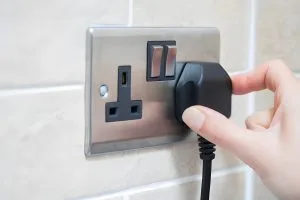
How to Tell If an Outlet Is Bad: Safe Checks You Can Do Yourself
Before assuming the outlet has failed, there are a few things you can safely check without taking anything apart. Start with the GFCI outlets in the room. In a kitchen, bathroom, garage, or other area where GFCI protection is required, a tripped GFCI can shut off power to other outlets on the same circuit. Press the reset button and see if the outlet comes back on.
If that doesn’t work, check your electrical panel for a tripped breaker. You can reset it once, then see if the outlet is working again. It’s also worth plugging the same device into another nearby outlet. That helps you figure out whether the problem is with one receptacle or something affecting the circuit.
That’s about as far as you should go without professional help. Don’t remove the cover, pull the outlet out, or try to tighten the wiring yourself.
When Should You Call an Electrician for a Bad Outlet?
If you notice a burning smell, scorch marks, sparking, a hot faceplate, or any kind of shock when using an outlet, shut off the circuit at the breaker if you can do so safely and call an electrician. Those symptoms can point to overheating, arcing, or another electrical fault that needs to be addressed.
Other problems are less urgent but still worth fixing. A plug that won’t stay in, an outlet that has stopped working, or an old two-prong receptacle may not be an emergency, but they shouldn’t be left indefinitely. A dead outlet, for example, could be a worn receptacle, but it could also be a loose or failing connection somewhere behind the wall.
Clear View Electrical provides outlet repair and replacement for homeowners in Whittier and throughout the surrounding Los Angeles County area. Our licensed electricians can determine whether the outlet itself has failed or whether the wiring or circuit is causing the problem. We also handle broader electrical repair and emergency electrical service when an issue can’t safely wait. You can reach us at (562) 445-3551.
Licensed Electrical Service
Need Help With a Bad Electrical Outlet?
Clear View Electrical provides outlet repair and replacement for homeowners in Whittier and throughout the surrounding Los Angeles County area.
FAQs
Frequently Asked Questions
How can I tell if an outlet is bad?
The clearest signs that an outlet is bad include plugs that won’t stay in, an outlet with no power, a faceplate that feels warm, or scorch marks on the plate. Any one of those is reason enough to stop using the outlet and have it checked.
Why does my outlet keep losing power?
Intermittent power usually comes down to a tripped GFCI, a loose wire behind the outlet, or a breaker that’s cutting out under load. If resetting the GFCI or breaker only helps for a short while, the connection is likely failing, and needs a closer look.
Can a bad outlet cause a fire?
Yes. When contacts loosen or wiring works free, the outlet builds up heat and can arc. That heat is what ignites the surrounding material.
Should I repair or replace a faulty outlet?
A worn outlet is almost always replaced rather than patched, since the part itself is inexpensive. The more important question is why it failed. If the wiring or circuit behind it is the cause, for example, replacing only the outlet leaves the real problem in place.
Can I replace an electrical outlet myself?
Some homeowners are comfortable replacing a standard outlet, but when you do, you’re still working with electrical wiring; and shutting off the breaker doesn’t eliminate every possible risk. If you’re not experienced with electrical work, it’s safer to have a licensed electrician handle the replacement. You should also leave the job to a professional if the outlet is overheating, sparking, damaged, or connected to a circuit that keeps tripping.
Call Clear View Electrical.
Licensed electricians, same-day service, flat-rate pricing—no callbacks, no guessing, no hourly surprises.
Fast, reliable electrical services across Greater Los Angeles, South Bay, Inland Empire, San Fernando Valley, and Orange County.